


How Good Architecture Improves Admissions and Brand Value for Schools
In today’s highly competitive education sector, academic results alone no longer define a school’s success. Parents evaluate schools holistically—looking at safety, infrastructure, learning environment, and long-term value. Increasingly, architectural design has become a decisive factor in shaping these perceptions.
At The School Designs Studio, a leading architecture firm in India specialising in educational institution design—from preschools and K–12 schools to colleges and universities—we have consistently observed how well-planned school architecture directly influences admissions, parent trust, and institutional brand value.
Good architecture is not ornamental—it is strategic.
Architecture as the First Brand Experience
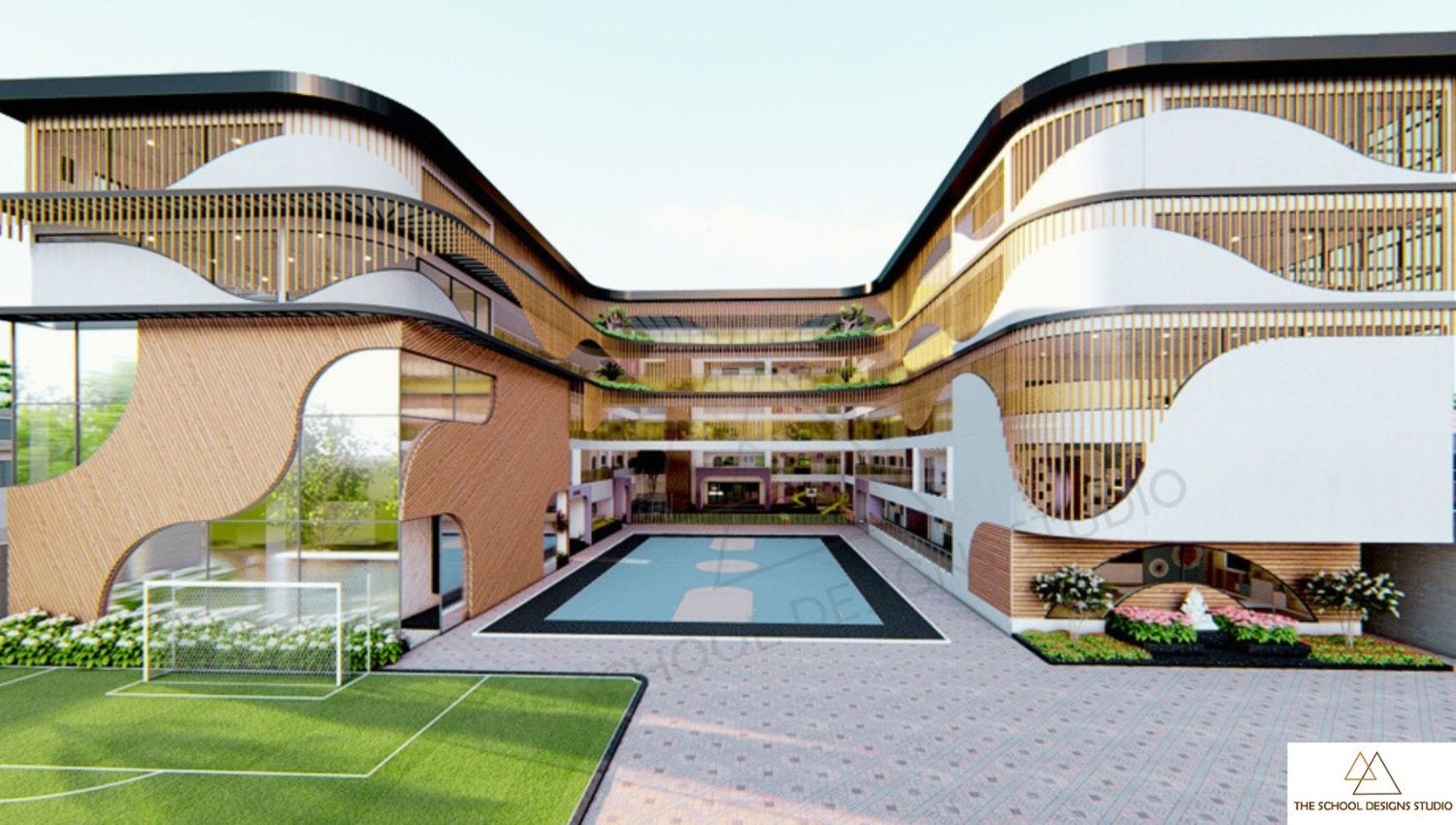
Sri Sri Ravishankar Vidya Mandir, Bengaluru – Designed by The School Designs Studio.
Before interacting with teachers or management, parents encounter a school visually—through campus photographs, site visits, Google listings, or social media. Architecture becomes the first silent spokesperson of the institution.
Real-world observation:
In multiple K–12 campuses we have worked on, schools with a clearly defined entrance zone, strong facade identity, and welcoming scale reported that parents formed a positive opinion within the first few minutes of the visit. In contrast, schools operating from converted residential buildings or poorly planned plots often struggled to communicate seriousness, despite good academics.
Architecture sets expectations—and expectations influence decisions.
Campus Design and Its Direct Impact on Admissions
1. Safety That Parents Can See
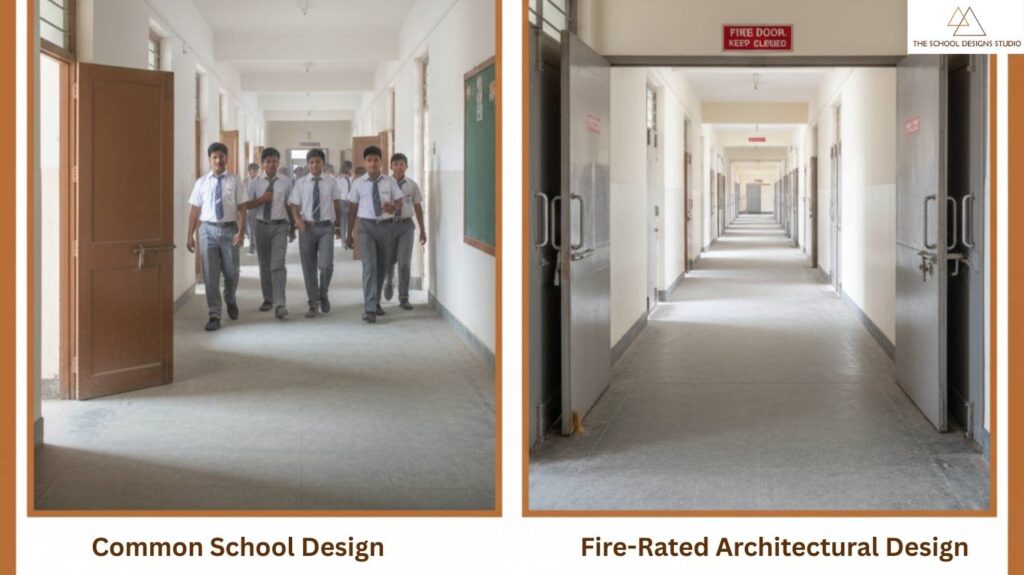
Parents today are extremely conscious of safety—fire exits, surveillance visibility, movement control, and evacuation clarity.
Example from practice:
In one mid-sized CBSE school redevelopment, reorganising circulation to separate student movement, visitor access, and service zones significantly improved parent confidence during admission tours. Although safety systems existed earlier, their visibility through design made the difference.
Good school architecture does not hide safety—it demonstrates it.
For a deeper understanding of how structural planning, fire safety, and evacuation design are addressed in Indian school buildings, you can also explore our detailed guide on Structural Safety in School Buildings: Guidelines for India’s Educational Infrastructure.
2. Child-Centric Design Builds Emotional Trust
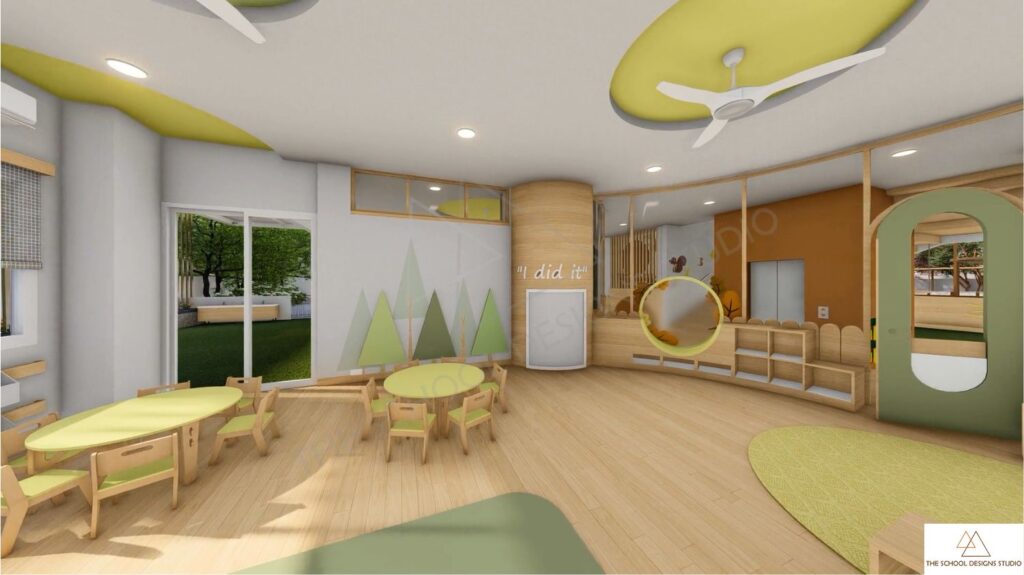
The Hugs and Cuddles Haven, Ahmedabad (Classroom Layout) – Designed by The School Designs Studio
Scale, light, colour, and openness matter—especially in preschools and primary schools.
Observed trend:
Preschools designed with low-height windows, internal courtyards, soft colour palettes, and seamless indoor–outdoor flow consistently receive better feedback from parents. Many parents explicitly associate such environments with emotional well-being and better learning outcomes—even before admissions begin.
This is why working with a school design expert is critical. Child-centric design cannot be improvised.
3. Smooth Movement Reflects Efficient Management
Congested corridors, confusing staircases, or poorly located toilets may seem like minor issues—but parents notice.
On-ground insight:
In several existing school campuses we’ve audited, simple re-planning—such as widening corridors and converting them to interactive learning spaces or relocating administrative blocks—improved visitor experience dramatically. Parents interpreted this spatial clarity as a sign of “well-managed” leadership.
Architecture silently reflects governance quality.
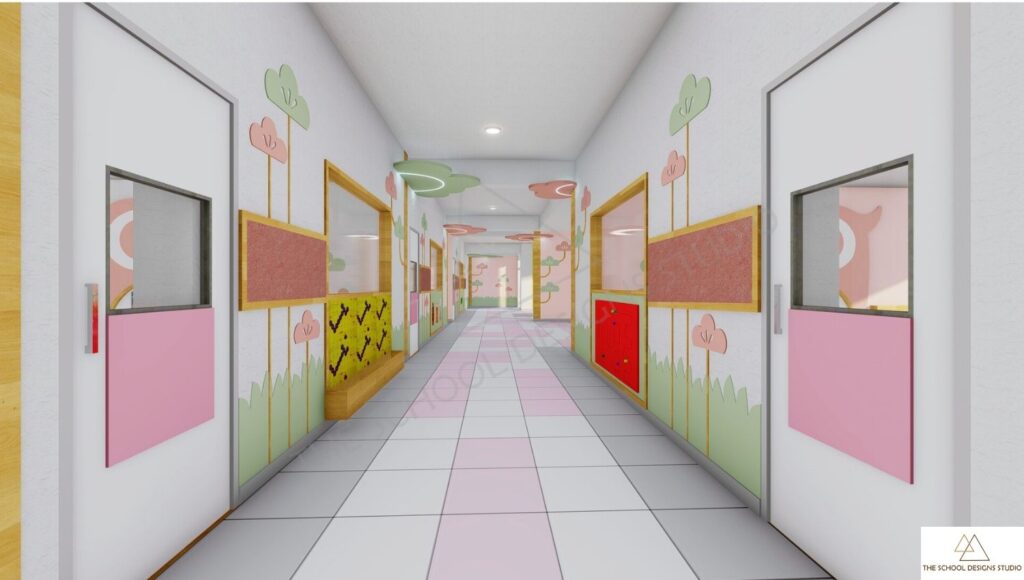
PP Savani School of Excellence, Bardoli, Gujarat (Interactive Corridor) – Designed by The School Designs Studio.
Architecture as a Long-Term Marketing Asset
Unlike advertisements that expire, architecture continuously markets the school.
- Campus photos dominate brochures and websites
- Courtyards become event backdrops
- Playfields and activity zones appear in social media reels
- Alumni memories are tied to physical spaces
Industry-wide example:
Many private schools in India are known for their campuses, which gradually become a defining part of their institutional identity and communication.
As one of the top architecture firms in India specialising in educational institution design, The School Designs Studio consciously designs campuses that remain visually relevant and brand-aligned for years.
Architectural Masterpieces in Indian Education: Campuses That Built Their Brand Through Design
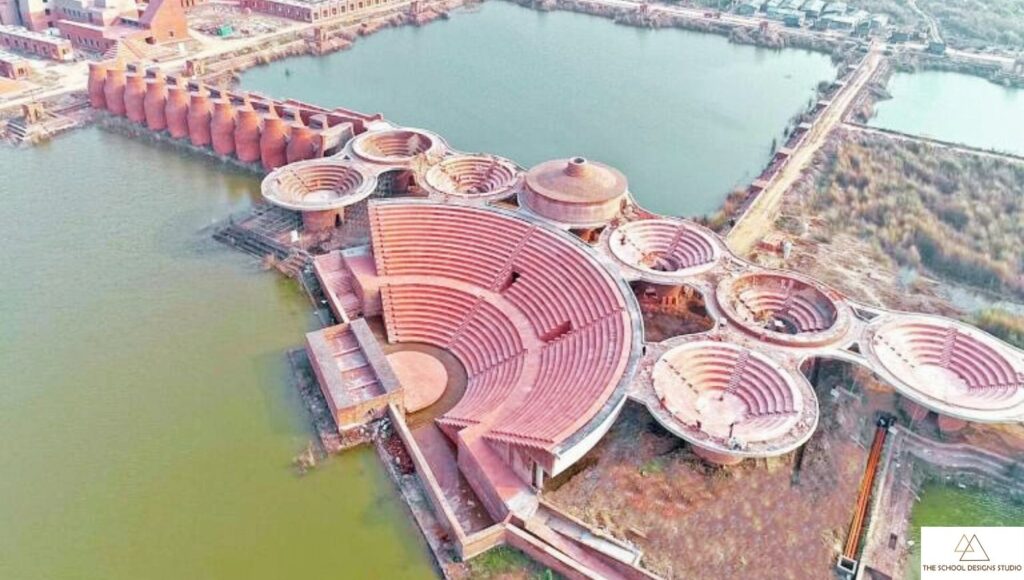
The new Nalanda University campus at Rajgir, Nalanda, is one of the world’s most thoughtfully designed educational campuses, where architecture itself reflects academic philosophy. Inspired by the ancient Nalanda Mahavihara, the campus reinterprets traditional principles through courtyard-centric planning, pedestrian-friendly movement, and low-rise academic clusters that encourage dialogue, reflection, and community learning.
A defining architectural element is the extensive use of exposed brick, referencing Nalanda’s historic ruins while providing durability, climatic comfort, and a timeless identity. The campus is also a benchmark in sustainable educational design, planned as a net-zero energy and net-zero water campus through passive cooling, solar energy integration, rainwater harvesting, and native landscaping.
Rather than relying on visual spectacle, Nalanda’s architecture communicates depth, restraint, and intellectual seriousness—strengthening its global academic identity and demonstrating how purpose-driven design can enhance institutional brand value.
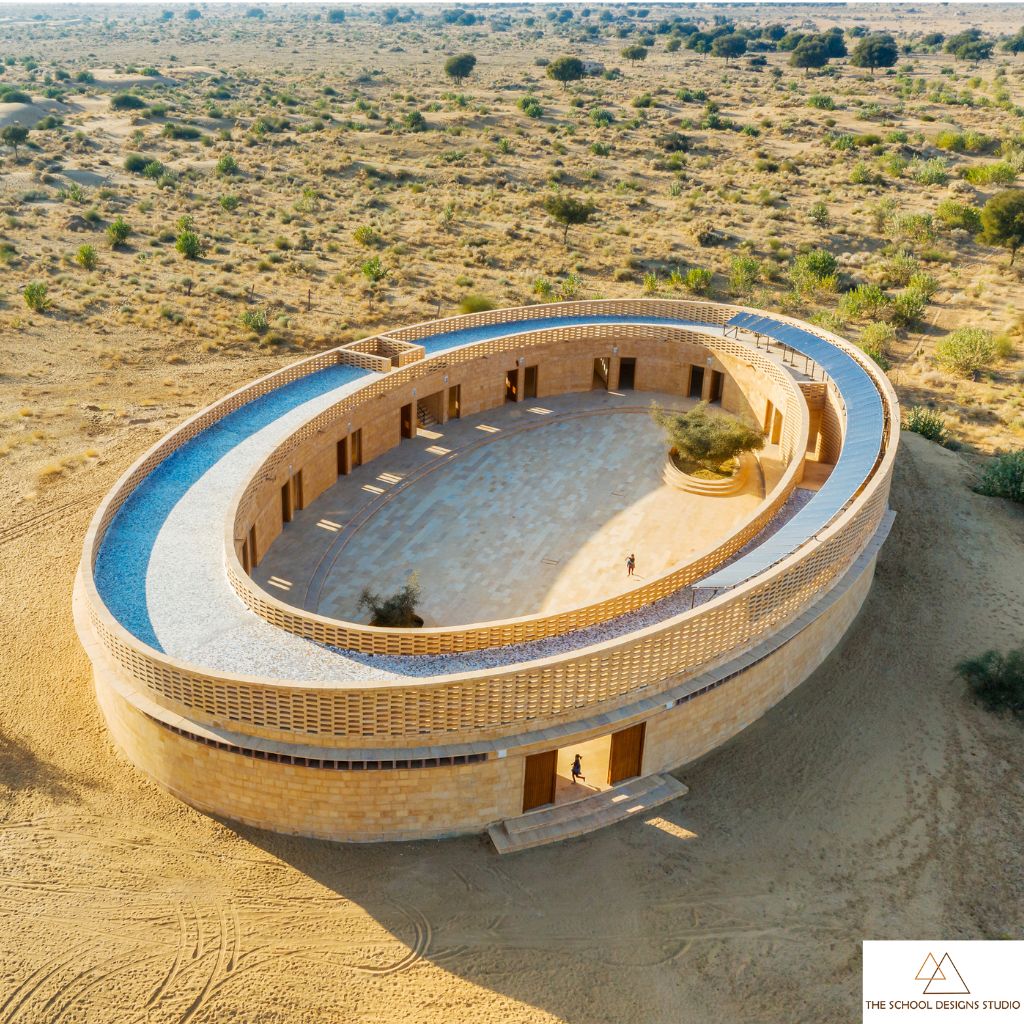
Set on the edge of the Thar Desert, Rajkumari Ratnavati Girls’ School has become a global benchmark for climate-responsive educational architecture. Designed as an oval-shaped, inward-focused campus, the form minimises heat gain, shields classrooms from harsh desert winds, and creates shaded courtyards that remain comfortable in extreme temperatures. Built using locally sourced Jaisalmer sandstone, the architecture is deeply rooted in the regional context while ensuring durability and low maintenance.
Beyond environmental intelligence, the school’s dignified, fortress-like presence symbolises safety, permanence, and pride—critical for girls’ education in a remote region. Its internationally awarded architecture proves how purpose-driven design can elevate educational institutions to global recognition, even in challenging climates.
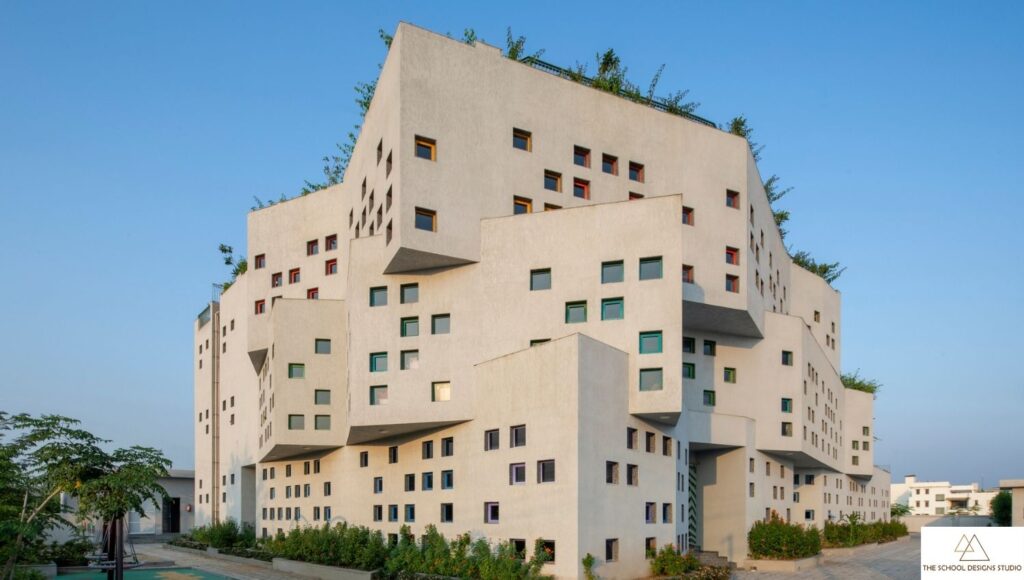
Located in Bhilwara, Rajasthan, Sangam Elementary School stands out as a powerful example of how thoughtful architecture can elevate an affordable, community-focused school to global recognition.
Designed with a stacked, cuboid massing punctuated by small, colourful window openings, the building responds intelligently to the hot semi-arid climate—reducing heat gain while allowing controlled daylight and ventilation.
The compact form optimises land use and construction cost, making it viable for a middle-class, tier-2 city context. Terraced play areas, shaded outdoor zones, and integrated landscape elements transform circulation spaces into active learning environments. Its bold yet restrained architectural language challenges the notion that impactful school design is exclusive to elite institutions, proving that well-conceived architecture can bring dignity, identity, and global visibility to accessible education.
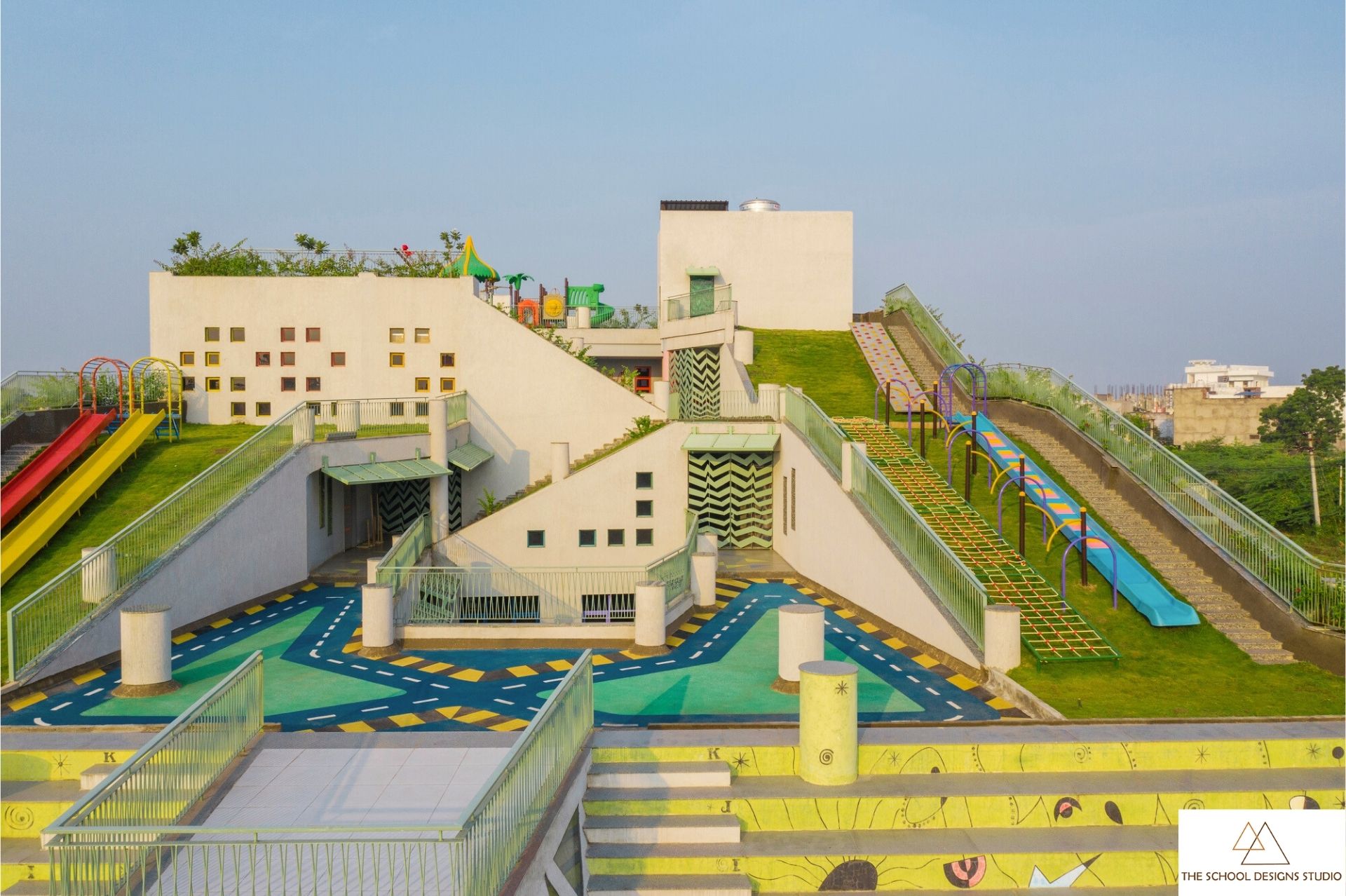
Located in the tier-3 town of Parasia, Madhya Pradesh, Unique International School demonstrates how a well-planned campus can become a strong identity marker beyond metropolitan contexts. Designed by The School Designs Studio as a nature-integrated, multi-block learning environment, the campus balances academic buildings, open courtyards, play zones, and shaded spill-out spaces to create a holistic learning ecosystem.
Clear zoning between academics, sports, and community spaces ensures smooth circulation and operational clarity, while vibrant colours, playful forms, and scaled architecture make the environment welcoming for children. Thoughtfully articulated massing, landscape-led planning, and experiential outdoor learning areas give the campus a distinctive visual character. The design reflects how purposeful, context-driven architecture can shape a school’s long-term identity and visibility—even before it becomes operational.
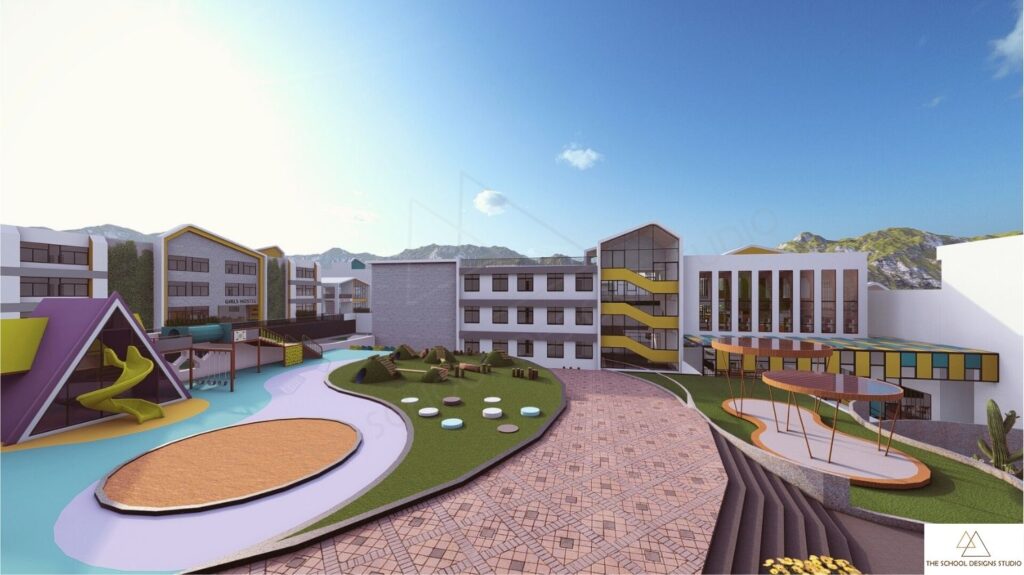
Unique International School, Parasia, Madhya Pradesh – Designed by The School Designs Studio
Architectural Consistency Strengthens Brand Value
Brand strength comes from coherence. When architecture aligns with educational philosophy, the message becomes powerful.
Examples of alignment we regularly design for:
- Progressive schools → flexible classrooms & breakout spaces
- Sports-oriented schools → visible, well-integrated athletic facilities
- Holistic schools → nature-integrated learning courtyards
Parents quickly sense when a school’s space matches its promise.
Better Design, Better Learning Outcomes
Architecture directly influences how students and teachers perform.
Well-documented outcomes we design for:
- Natural daylight reduces fatigue and improves focus
- Acoustic zoning improves classroom discipline
- Outdoor learning areas increase engagement
- Comfortable staff spaces improve teacher retention
Parents increasingly ask about these aspects during campus visits—indicating growing awareness that learning environments matter as much as curricula.
Future-Ready Campuses Attract Long-Term Trust
Schools are long-term institutions. Campuses that grow haphazardly often lose open spaces, visual identity, and operational efficiency.
Real scenario:
Several schools approach us after years of unplanned expansion, struggling with circulation conflicts and loss of play areas. In contrast, schools with a clear master plan—designed from the start—expand seamlessly without disrupting daily operations or brand image.
This foresight is a hallmark of working with the best architecture firm in India, specialising in educational institutions.
Transparency in Design Builds Institutional Credibility
Open planning, visual connectivity, and shared spaces signal openness in operations.
Parents associate transparent architecture with:
- Ethical management
- Student-centric values
- Progressive leadership
In contrast, rigid, closed-off buildings often feel outdated—regardless of teaching quality.
Why Schools Trust - The School Designs Studio
With deep experience across preschools, K–12 schools, colleges, and universities, The School Designs Studio is recognised as a top school design expert and a leading architecture firm in India, specialising in educational institution design.
Our design philosophy integrates:
- Educational psychology
- Indian safety and building codes
- Climate-responsive planning
- Brand-focused architectural identity
We design campuses that perform operationally, inspire emotionally, and strengthen brand value strategically.
Conclusion: Architecture That Pays Back
Schools that invest in thoughtful architecture consistently see returns—in admissions, parent trust, staff retention, and institutional reputation. Good design is not an expense; it is a long-term asset.
In an era where parents choose schools as carefully as they choose homes, architecture has become a decisive factor.
At The School Designs Studio, we design learning environments that don’t just look good—but help schools grow, compete, and lead.