
The Impact of Classroom Layout on Student Engagement – Why Design Matters
When we think about improving academic performance, the focus often turns to teaching techniques, curriculum quality, or technology integration. But one of the most influential and underrated factors is the classroom layout itself. A well-designed classroom affects how students learn, interact, and emotionally connect with their environment. From lighting to furniture to activity zones—every design decision contributes to student engagement, productivity, and overall learning outcomes.
At The School Designs Studio, a Leading Architecture firm for Educational Institutions, we have observed through multiple projects that the classroom environment is not just a container for learning—it is an active driver of learning. The right learning space fosters curiosity, excitement, independence, and emotional well-being.
Let’s explore how a thoughtfully planned classroom layout transforms engagement in real learning environments.
1. Lighting & Ventilation: Fueling Alertness and Comfort

PP Savani School of Excellence, Bardoli, Gujarat. Designed by The School Designs Studio
Lighting and ventilation may appear technical in nature, but they directly affect the brain’s ability to process information, maintain energy levels, and focus for longer periods. If you’d like to explore this subject further, we’ve already written a detailed blog on The Role of Natural Light in Learning Environments, which explains how sunlight influences student mood, concentration, and overall academic performance.
Natural daylight improves mood and cognitive performance, while good ventilation and balanced temperature help reduce fatigue and restlessness. Acoustic materials and sound-proofing techniques minimize external disturbances so students can stay immersed in learning without distraction.
In our classroom projects across India, The School Designs Studio prioritizes daylight integration, glare-free smart lighting, efficient HVAC systems, and acoustic comfort to ensure students remain comfortable and alert throughout the school day.
2. Visual Stimulation: Every Student Should See and Connect
The visual environment within and outside the classroom also influences emotional calmness and focus. External views through windows should reflect soothing natural elements — greenery, open skies, or landscaped courtyards — offering a relaxing and refreshing visual break that supports mental well-being.
At the same time, the design must be mindful of distraction control. If windows are positioned too low or face active corridors and playgrounds, students may become more engaged with external movement than the classroom instruction. Therefore, windows are planned at an optimal height, allowing natural light and peaceful views while minimizing exposure to distracting external activities.
When every visual element — boards, walls, windows, graphics, and displays — is intentionally designed to stimulate the mind without overwhelming it, the classroom becomes a space that supports clarity, calmness, and deep learning. Visual connectivity is a simple principle, yet one of the most influential drivers of sustained student focus and attention.

The Hugs and Cuddles Haven, Ahmedabad, Gujarat. Designed by The School Designs Studio.
3.Ergonomic and Flexible: Supporting Movement and Diverse Learning Styles

The Liittle Wings PreSchool, Bengaluru. Designed by The School Designs Studio.
Modern classrooms have moved beyond fixed benches to support flexibility and inclusiveness. Ergonomic seating ensures comfort, while adaptable furniture allows quick shifts between group work, discussions, hands-on activities, and focused study. With movement becoming a natural part of the learning process, students stay more engaged and attentive.
But flexibility goes much beyond furniture. At The School Designs Studio, we design classrooms that can expand and transform for multiple learning purposes. Spaces can seamlessly stretch beyond the primary classroom zone to merge with adjacent activity spaces when needed, allowing the same area to support academics, project-based learning, workshops, indoor play, or community-building activities.
And for readers who wish to dive deeper into this concept, our blog “Flexible Learning Spaces: Designing Schools for Collaborative and Individual Learning” explores how adaptable learning environments enhance both collaboration and personalised study.
Smart boards, display boards, writing boards, and pin-up surfaces are integrated in such a way that multiple teaching and learning styles can happen simultaneously in the same space. Teaching tools can also be switched or repositioned based on the requirement, ensuring that the classroom never restricts learning but adapts to it.
This level of adaptability is not an add-on — it is a core learning asset. Designing such future-ready, dynamic classrooms is truly the hallmark of the Best architect for School Design, because every element in the space becomes a tool for movement, creativity, and student engagement.
A flexible classroom at the Little Kids Playhouse and Preschool, Tiruvallur, Tamilnadu. Designed by The School Designs Studio.
4.Colors & Graphics: Emotionally Intelligent Learning Spaces
Color psychology significantly influences children’s behavior, focus, and emotional well-being. The palette and graphics within a classroom must be thoughtfully aligned with age groups — calming and playful for early learners, energetic and goal-oriented for middle graders, and mature yet stimulating for high school students. When the visual tone aligns with the learner’s developmental stage, the environment becomes an emotional support system that nurtures motivation and attention.
Graphics and wall visuals do much more than beautify a classroom — they become silent teaching tools that reinforce:
- Curricular themes
- Positive values and character-building
- Cultural identity and community belonging
- Joyful learning
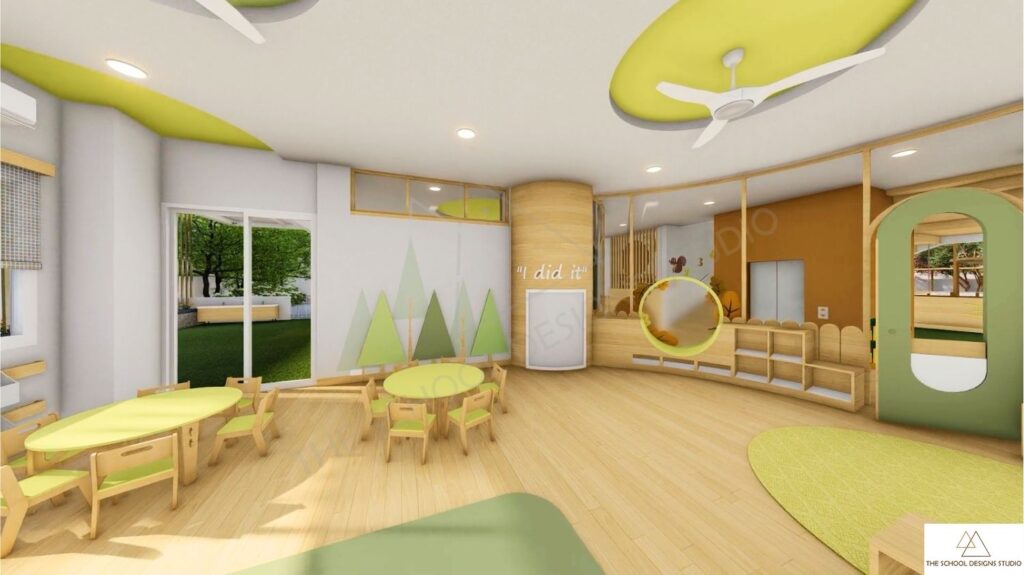
A warm thoughtfully designed classroom at The Hugs & Cuddles Haven, Ahmedabad — By The School Designs Studio
If you’d like to explore more about how colour and material selection impacts learning environments, you can also refer to our dedicated blog: “The Role of Colors and Materials in School Architecture and Interior Design.”
Emotionally intelligent learning spaces ensure that children see themselves reflected in their environment. Dedicated walls where students can freely create, display, and express their imaginations — from sketches and group projects to spontaneous ideas — become a canvas of their growing identity. When the classroom respects their voice and creativity, children feel a strong sense of belonging and ownership, gaining confidence and emotional safety while viewing the classroom not just as a place to learn, but as a place where they truly matter.
5. Defined Activity Zones: Supporting All Forms of Learning
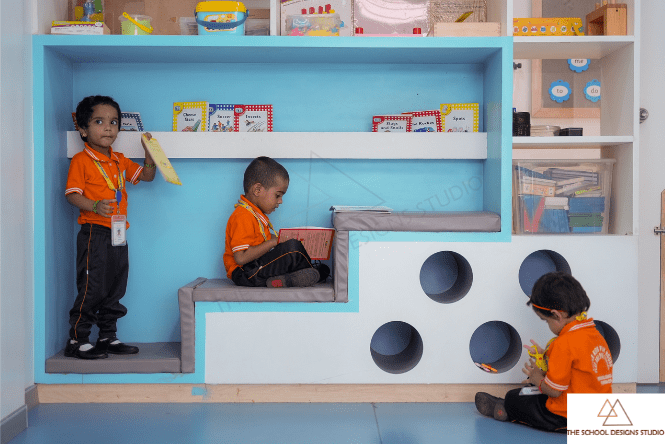
Little Kids Playhouse and Preschool, Tiruvallur, Tamilnadu. Designed by The School Designs Studio.
Classrooms today are no longer meant for one-way teaching or a single-purpose setup. Children learn through exploration, collaboration, imagination, and hands-on experience — and the physical design of the classroom must encourage this diversity in learning styles. Zoning different functions within the same classroom allows the learning cycle to remain dynamic, fluid, and deeply engaging.
Thoughtfully integrated activity zones may include:
- Reading corners
- Discussion nooks
- Lab or experimentation tables
- Mini-library shelves
- Art or creativity spaces
- Quiet reflection or mindfulness areas
When these zones exist within the classroom — rather than in separate rooms or restricted-use facilities — children develop a natural interest in exploring them. However, when such opportunities are embedded directly into the classroom, curiosity is always within reach. Students don’t need to wait for a science lab period to explore materials or wait for art class to express their imagination. The environment itself silently invites participation throughout the day, nurturing a deeper love for learning.
These carefully designed spaces create a healthy learning rhythm — where students can shift between focus, creativity, collaboration, physical interaction, and reflective thinking. The classroom becomes a miniature ecosystem of experiences, supporting every learner’s pace and personality.
6. The Power of an Organized, Clutter-Free Classroom
Clutter causes stress—for both teachers and students. Classroom organization has a direct impact on focus and efficiency.
Smart storage solutions like cubbies, wall shelves, and concealed cabinets help:
- Reduce visual noise
- Provide freedom of movement
- Improve safety
- Encourage responsibility among students
A clutter-free classroom feels calm and allows students to stay mentally centered.
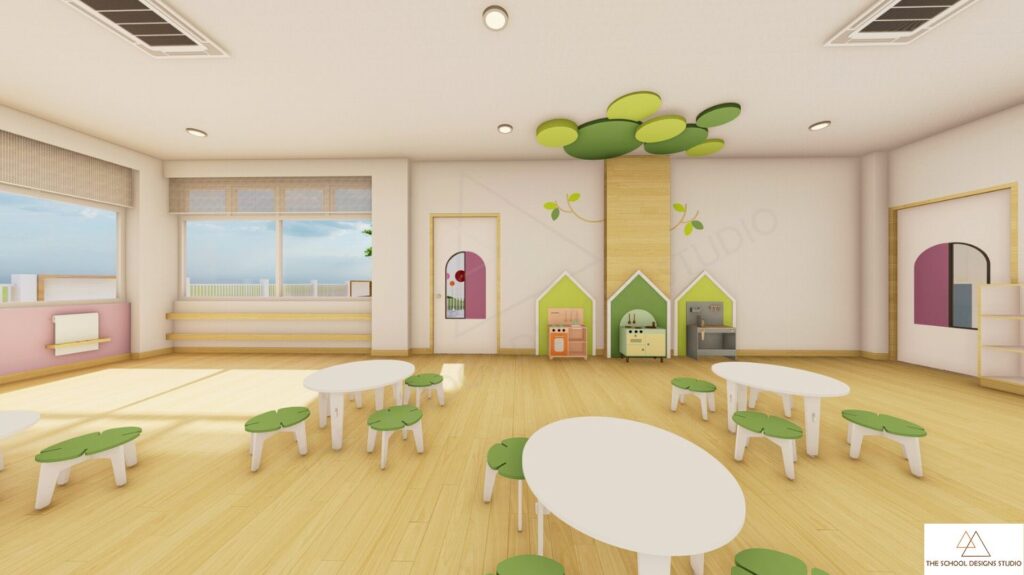
Samar Global High School, Ludhiana. Designed by The School Designs Studio
7. Giving Students Ownership of Their Space

Kidzee Preschool, Kompally, Hyderabad. Designed by The School Designs Studio.
The most powerful learning environments are not just visually impressive — they are emotionally meaningful to children. When students feel a sense of ownership over their classrooms, their behavior, engagement, and responsibility naturally transform. They no longer see the space as merely a school room, but as their place — a space they belong to and take pride in.
This sense of ownership does not emerge automatically; it is nurtured through thoughtful design and intentional learning experiences.
Ownership develops when classrooms are designed to give students the freedom to participate in shaping and maintaining their own environment. This includes creating spaces where:
- Students can personalize corners or boards with their own work
- Classroom norms and values are displayed by students, not just for them
- Rotating responsibilities (class monitors, library helpers, cleanup teams, plant caretakers, etc.) are integrated into the daily routine
- Learning materials, storage units, and supplies are easy for students to access, organize, and put back independently
When children contribute to the upkeep of the classroom — not as imposed duties but as shared pride — they begin to treat it the way they treat their room at home. They learn that wiping a desk, arranging books, watering a plant, or organizing materials is not “punishment” — but a sign of belonging.
Over time, this cultivates:
- Respect for shared resources
- Personal accountability
- Responsibility toward peers
- Emotional connection to the school
At The School Designs Studio, we implement this philosophy through environments that make children feel valued and in control
A classroom built like a “second home” results in students who are not just occupants of the space, but caretakers of it. When students feel ownership, the classroom does not become messy — it becomes meaningful. And that emotional connection becomes one of the strongest foundations for discipline, pride, and lifelong learning.
When Design Inspires Learning, Engagement Becomes Natural
A classroom layout is not merely an arrangement—it’s a philosophy that shapes how children think, behave, and create. When classrooms are thoughtfully designed, students don’t just learn better—they want to learn better.
Whether it is furniture and classroom flexibility, natural light, or emotional connection with the space, every layer of design matters.
As Top architects for school and one of the most trusted names in educational institutions, The School Designs Studio continues to champion research-driven, student-centric design that makes learning environments joyful and inspiring.