
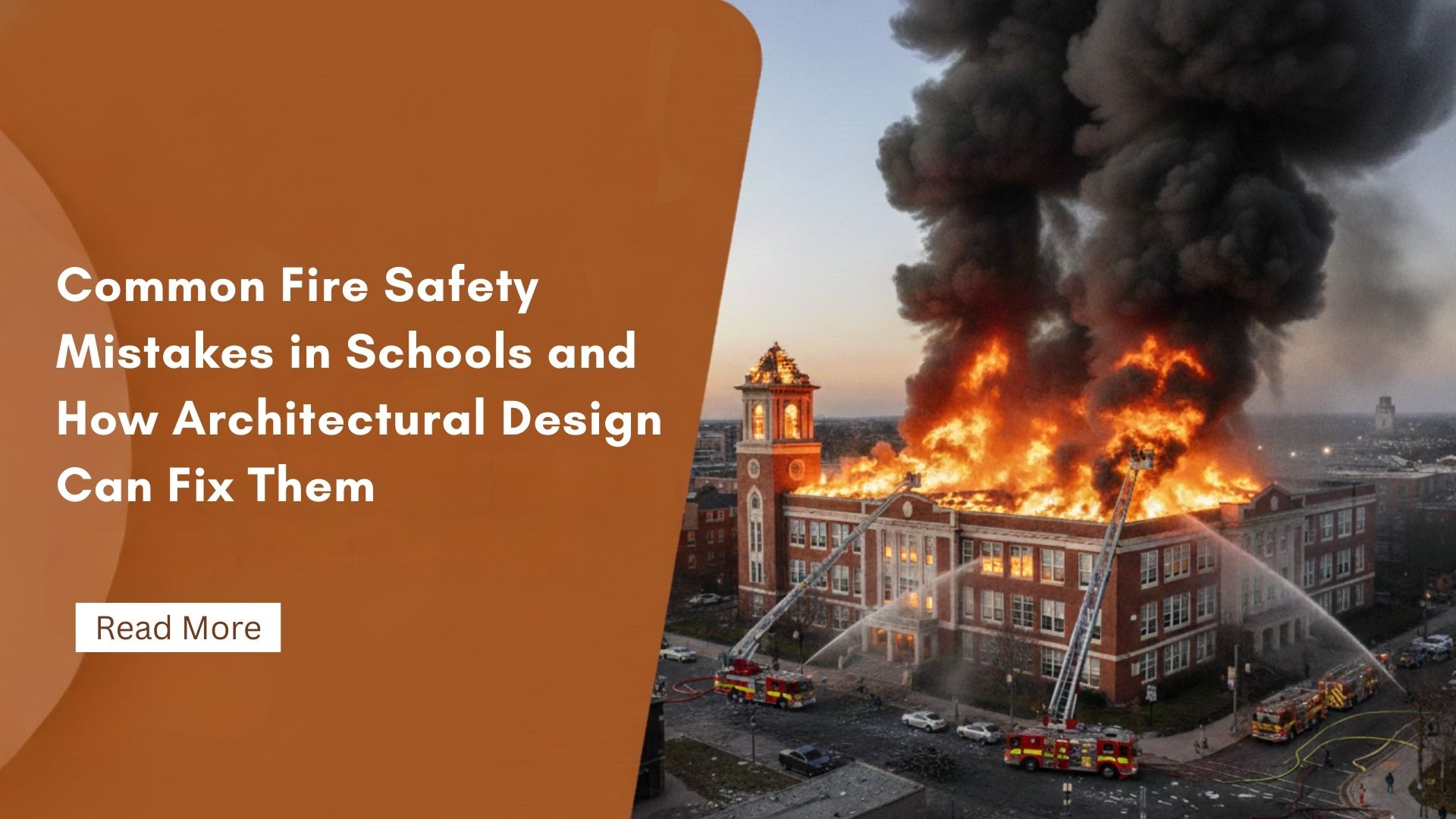
Common Fire Safety Mistakes in Schools and How Architectural Design Can Fix Them
Fire safety in educational campuses is not just a statutory requirement—it is a moral, structural, and legal responsibility. Schools host hundreds, even thousands, of children, teachers, and staff daily, making them one of the most sensitive building typologies. Even a single lapse can lead to life-threatening situations. While schools often focus on fire extinguishers, alarms, and periodic fire drills, the foundation of any safe school begins much earlier—at the architectural design stage.
At The School Designs Studio, a leading architecture firm in India specialising in educational institution design—from preschools and K–12 schools to colleges and universities—we frequently observe how overlooked design decisions become major safety risks later. This blog outlines the most common fire safety mistakes seen in Indian schools. It explains how thoughtful architectural design aligned with NBC 2016, NDMA guidelines, and CBSE safety norms can eliminate them.
1. Poorly Designed Exit Routes and Circulation Paths
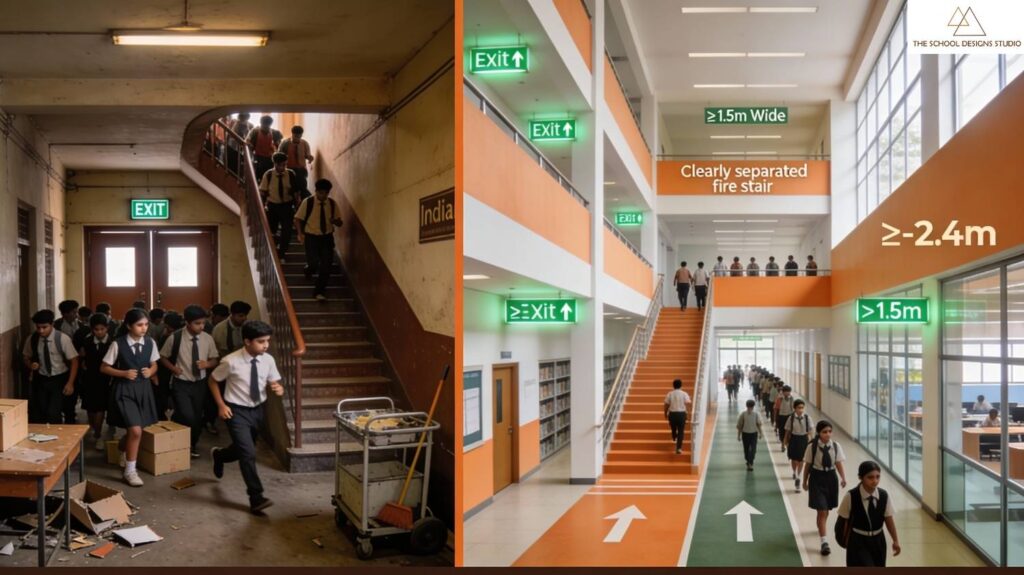
One of the most widespread fire safety problems in schools is inadequate, poorly planned exit routes. Narrow corridors, blocked passageways, and insufficient staircases can significantly slow down evacuation. According to the National Building Code (NBC 2016, Part 4 – Fire & Life Safety), educational buildings must have corridors at least 2–2.4 metres wide and staircases measuring 1.5 metres or more.
Many existing schools fail to meet these basic dimensions, creating bottlenecks during emergencies. Similarly, some buildings offer only one staircase or place exits too close to each other, violating NBC’s requirement for two remote exits per floor.
Architectural design can fix this by ensuring wide, unobstructed corridors, fire-rated staircases, clear exit lines from classrooms and labs, and illuminated signage guiding students toward safe zones. Designing these elements early prevents costly retrofitting later and significantly improves evacuation speed.
2. Lack of Fire Compartments and Fire Zones
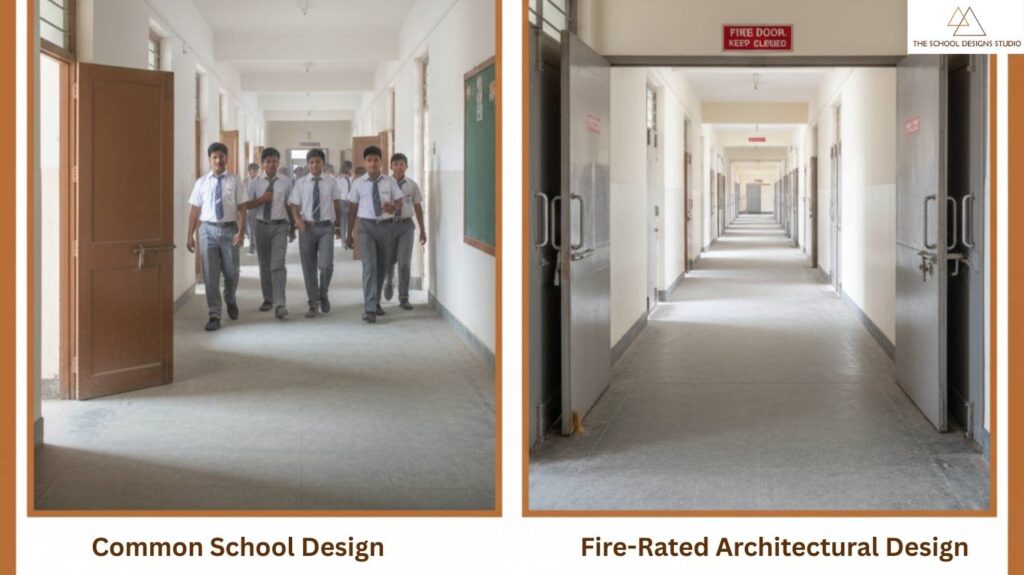
Fire compartmentation—dividing a building into fire-resistant sections—is one of the most effective ways to contain fire and smoke. Yet many schools are built as open, continuous blocks without fire-rated walls or self-closing fire doors. This leads to rapid fire spread, especially through long corridors.
NBC 2016 mandates that educational buildings introduce fire compartments every 750 m² and use 2-hour fire-rated walls and 1-hour fire doors to isolate key areas such as labs, libraries, and utility rooms.
Well-designed compartmentation ensures that if a fire breaks out, children and teachers have enough time to evacuate safely without smoke filling the entire building. At The School Designs Studio, this approach is a core part of our school design philosophy, particularly for high-density K–12 campuses.
3.Unsafe Placement of High-Risk Areas
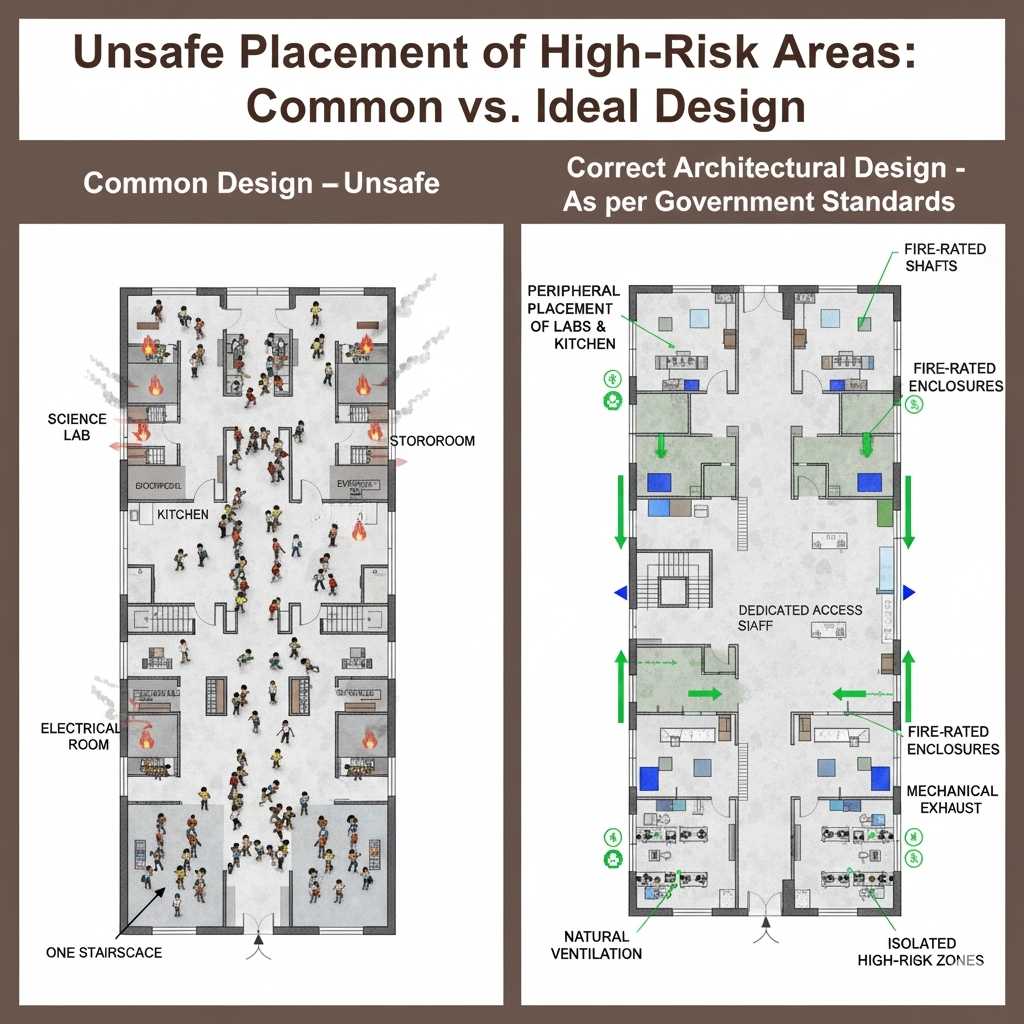
Another major oversight in school planning is the improper positioning of fire-prone spaces such as kitchens, science labs, electrical rooms, and storerooms. When these areas are located near classrooms or heavily occupied zones, they pose heightened risks.
NBC and the Indian government fire norms recommend placing these high-risk areas on the periphery of the building with adequate ventilation, fire-rated enclosures, and independent exits for quick evacuation.
Architecturally, this can be solved by:
- Designing separate access for labs and kitchen staff
- Using natural ventilation supported by mechanical exhaust
- Providing fire-rated cable shafts and utility routes
- Creating isolated pockets for high-risk rooms
Strategic placement prevents ignition sources from affecting classroom clusters and helps keep main circulation paths smoke-free.
4. Inefficient Courtyards, Assembly Areas, and Open Spaces
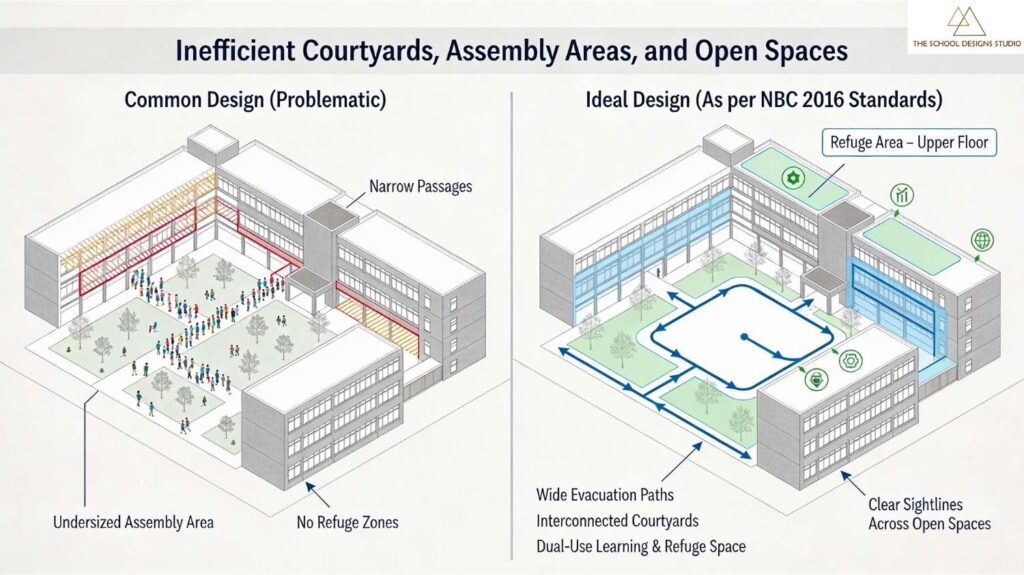
Many schools treat outdoor spaces only as recreational areas, overlooking their role in emergency management. Poorly connected courtyards, undersized assembly zones, or a lack of identified congregation points can cause confusion and crowding during evacuation.
NBC 2016 requires that schools maintain a safe assembly area large enough to accommodate all occupants. Additionally, multi-storey schools must provide refuge areas at specified intervals.
Architectural planning should integrate courtyards and open areas as dual-function spaces—places of learning during regular hours and refuge zones during emergencies. Wide outdoor pathways, direct access from corridors, and open visibility improve evacuation flow significantly.
5. Absence of Vertical Fire Protection Systems
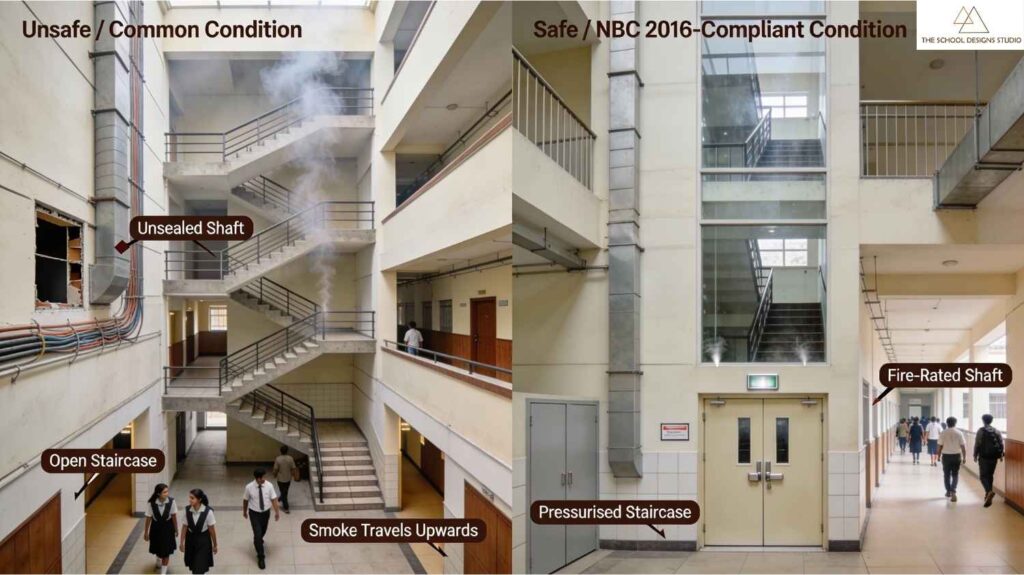
Vertical openings such as staircases, shafts, and atriums can rapidly transport smoke between floors if poorly designed. Open staircases, unsealed service ducts, or non-rated shafts act as chimneys during fires.
NBC 2016 requires pressurised staircases, 2-hour-rated shafts, and smoke management systems for multi-level educational buildings.
To address this, architects must ensure:
- Pressurised, fire-rated staircases with automatic closing doors
- Properly sealed utility shafts
- Smoke curtains and barriers for atriums
- Controlled ventilation systems to reduce smoke flow
These measures protect vertical circulation and ensure occupants can move safely between floors during evacuation.
6. Insufficient Access for Fire Tenders and Emergency Vehicles
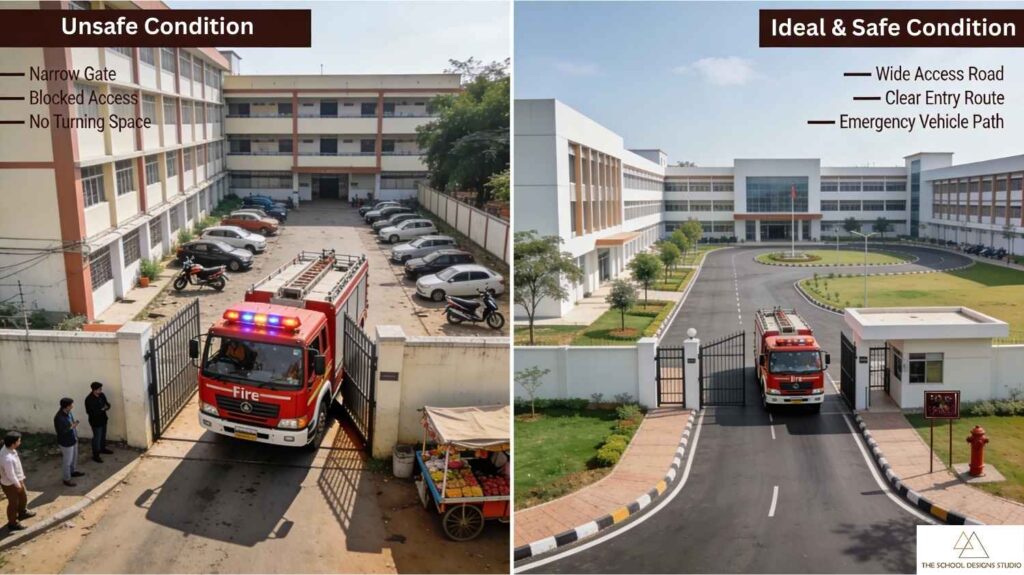
Fire department access remains one of the most neglected safety requirements in school campuses. Narrow gates, blocked periphery roads, and a lack of turning clearance prevent fire tenders from reaching the site quickly.
NBC 2016 mandates a 6-metre-wide fire tender movement loop around buildings above 15 m height, along with a clear 4.5 m wide entry gate and 9–12 m turning radius.
Architectural master planning must prioritize peripheral access roads, hydrant points positioned at accessible locations, and dedicated fire tender entry routes. These design elements ensure emergency responders can reach any corner of the campus without delay.
7. Outdated or Incomplete Fire Safety Systems
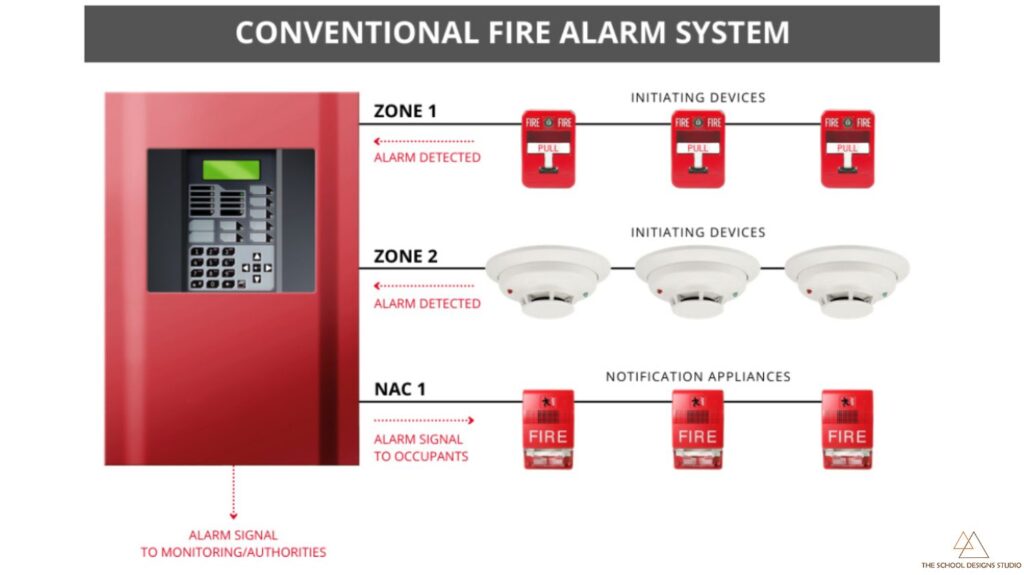
Many schools rely solely on fire extinguishers and neglect modern fire detection and suppression systems. NBC 2016 and state fire norms require:
- Automatic fire alarms
- Smoke detectors
- Sprinklers (mandatory in buildings above 12 m height or >500 m² area)
- Hydrant systems
- Public Address (PA) systems
Integrated systems allow for quicker detection, faster communication, and coordinated evacuation. Architects must design accessible yet concealed MEP shafts to maintain both compliance and aesthetics.
Mandatory Fire Safety Training and Drills in Schools
A major reason fire equipment fails to save lives is the lack of trained personnel. According to the NDMA School Safety Policy 2016 and CBSE Safety Guidelines, every school must:
- Conduct fire safety training every six months
- Carry out mock evacuation drills twice a year
- Form a School Disaster Management Committee (SDMC)
- Train staff and senior students to use fire extinguishers, hydrants, and alarm systems
Architectural planning supports better training by providing:
- Dedicated fire safety demonstration zones
- Large assembly spaces for full-school evacuation
- Clear signage aligned with drill instructions
- Emergency control rooms in larger campuses
Training and design together build a genuinely safe school.
Why Architectural Design Matters Most
While retrofitting helps, it is always more expensive and less effective than designing fire safety from the beginning. As a top school architecture firm in India, The School Designs Studio integrates NBC 2016 norms, fire safety engineering, and child-centric planning into every project—from preschools and K–12 campuses to universities.
Good architectural design ensures:
- Accurate forecasting of fire risks
- Materials and layouts that support fire resistance
- Safe movement and circulation
- Balanced aesthetics and safety
- Long-term compliance with national and local fire rules
Fire safety is not an afterthought—it is a design responsibility.
Conclusion
Schools must be safe, nurturing, and structurally secure environments for children. By understanding common fire safety mistakes and addressing them through thoughtful architectural design, educational institutions can achieve more than regulatory approval—they can create genuinely safe learning spaces.
The combination of proper planning, compliance with Indian standards, and regular fire safety training ensures that schools remain prepared, protected, and aligned with best practices.


